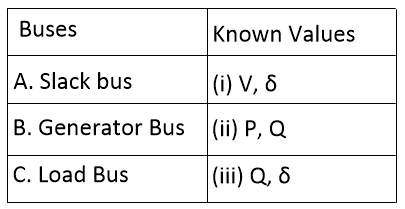
Bus Type - Known Parameter - Unknown Parameter Load Bus -P, Q - V, phase angle Generator Bus - P, V (magnitude) - Q, Voltage phase angle Slack Bus Voltage - magnitude and phase angle - P, Q
A remote terminal unit (RTU) is a microprocessor-controlled electronic device that interfaces objects in the physical world to a distributed control system or SCADA (supervisory control and data acquisition) system by transmitting telemetry data to a master system and by using messages from the master supervisory. This is accomplished by transmitting telemetry data to the system and/or changing the physical state of connected objects based on control messages received from the automation system. It is used to interface field devices with SCADA. RTUs can support multiple communication protocols at the same time. A limited number of input and output devices can be added to it.
 EXAMIANS