Carrier current over the power line provides simultaneous tripping of circuit breakers at both ends of the line in one to three cycles. Thereby high-speed fault clearing is obtained, which improves the power system stability. The auto-reclosing simultaneous reclosing signal is sent thereby simultaneous (1 to 3 cycles) reclosing of the circuit breaker is obtained. For simultaneous faults, carrier-current protection provides easy discrimination.
As per answer key "pilot protection" is true but there is mistake the right answer is "none".
A voltage dip is a short temporary drop in the voltage magnitude in the distribution or customer's electrical system. Common causes of voltage sags and under voltages are short circuits (faults) on the electric power system, motor starting, customer load additions and large load additions in the utility service area. Sags can cause computers and other sensitive equipment to malfunction or simply shut off.
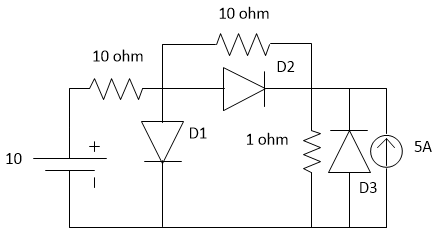
For the given circuit shown in figure, D1 is forward bias mode - On state D2 is in reverse bias mode - off state D3 is in reverse bias mode - off state.
Conductor with 75 °C temperature rating must have ampacity from the 60°C column or the 75°C column. It is permissible to use the 75°C rating if the installed conductor is rated at least 75 °C. Because all of the connection points in this example have at least a 75°C rating, the conductor’s ampacity can be based on the 75°C column
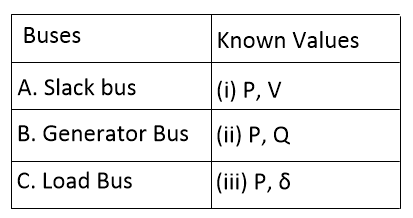
Bus Type - Known Parameter - Unknown Parameter Load Bus -P, Q - V, phase angle Generator Bus - P, V (magnitude) - Q, Voltage phase angle Slack Bus Voltage - magnitude and phase angle - P, Q
 EXAMIANS